
Hello! Today we explore a familiar herb in Western cuisine with a distinctive flavor and many wonderful benefits – Parsley (Petroselinum crispum) – both an indispensable seasoning and a valuable medicinal plant supporting many conditions. Let's find out the details together!
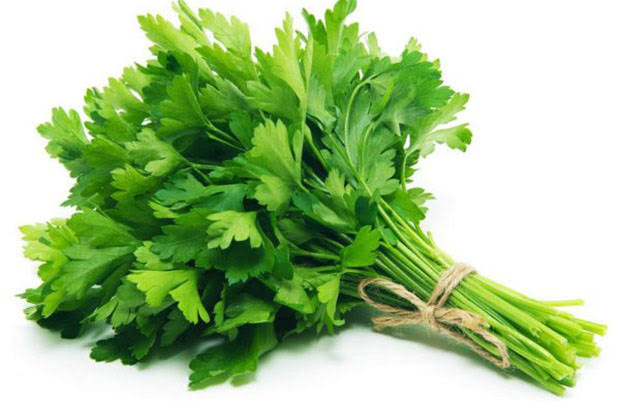
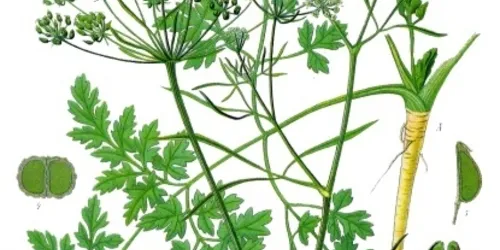
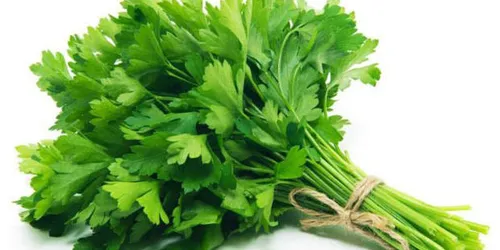
📸 [Photos 1 and 2 – Illustration and real images of the Parsley plant]
I. GENERAL INTRODUCTION TO PARSLEY
Parsley (scientific name: Petroselinum crispum) is a biennial herbaceous plant with light green leaves, very commonly used in Middle Eastern, European, and North American cuisine.
🌱 Identification features
- • Stem: Erect, longitudinally grooved, much branched.
- • Leaves: 2-3 times pinnately compound, margins toothed. Two types: flat-leaf and curly.
- • Root: Taproot system develops into small cylindrical tuber, grows deep.
- • Flowers: Small, white or greenish-yellow, in compound umbels at the top.
- • Fruit: Small schizocarp, containing flat seeds inside.
II. HISTORY AND ORIGIN
Parsley originates from the western Mediterranean region (mainly around Italy, Greece, Spain, Algeria, and Morocco). Since ancient times, Greeks and Romans cultivated and used this plant as a seasoning and medicine.
III. GROWTH CHARACTERISTICS AND IDEAL LIVING CONDITIONS
a. Ecological characteristics
- Biennial herbaceous plant, prefers cool climate.
- Rich in vitamins K, C, A and flavonoids.
b. Care conditions for always green and healthy plants
- 🌡️ Temperature: Ideal 15-24°C. Too hot, leaves dry and become bitter.
- 🌱 Soil: Loose, humus-rich, light sandy, pH 6.0-7.0.
- 💧 Water: Keep soil evenly moist, avoid waterlogging that causes root rot.
- ☀️ Light: Indirect light or mild sun 5-6 hours/day.
📸 [Photos 3 and 4 – Images of dishes and applications from Parsley]


📸 [Photo 5 – Images of dishes and applications from Parsley]

IV. NUTRITIONAL COMPOSITION AND DIVERSE BENEFITS
a. Nutritional composition
- 🦴 Vitamin K: Helps blood clotting and strong bones.
- 🍊 Vitamin C: Boosts immunity, powerful antioxidant.
- 👁️ Vitamin A: Good for vision and immune system.
- 🦴 Minerals: Potassium, Iron, Folate.
- 🧬 Flavonoids: Apigenin anti-inflammatory, reduces cancer risk.
- 🌿 Essential oils: Apiol, Myristicin, Beta-phellandrene.
b. Remarkable benefits
- 💪 Nutritional supplement: Vitamin K for bones, vitamin C for immunity.
- 💧 Kidney support and diuretic: Eliminates excess water and salt, reduces swelling.
- 🧬 Antioxidant: Flavonoids anti-inflammatory, cancer prevention.
- 🌬️ Fresh breath: Natural essential oils eliminate bad breath.
- 🍳 In cooking: Garnish seasoning, ingredient for soups, stews, salads, garlic butter sauce.
V. PROPAGATION TECHNIQUES AND DETAILED CARE
a. Propagation
🌱 Preparation before sowing:
- Choose loose, organic-rich, humus-rich, well-drained soil.
- Soak seeds in warm water for 24-30 hours, keep warm until white sprouts appear.
🌱 Sowing steps:
- Make shallow furrows of 0.5 cm or spread seeds evenly on the surface.
- Cover with fine soil or coconut coir less than 1 cm.
- Water with a fine spray, cover with straw or plastic for the first 5-7 days.
b. Care and disease prevention
- 💧 Watering: Once/day in the morning, maintain moisture, avoid waterlogging.
- ☀️ Light: Direct sun or strong light 6-8 hours/day.
- 🌾 Fertilizing: Organic fertilizer or vermicompost once/month.
- ✂️ Pruning: Remove old, wilted leaves, cut close to the stem when harvesting.
- 🧹 Weeding: Pull weeds regularly.
🛡️ Pest and disease prevention:
- Soil treatment: Mix lime before planting.
- Watering: Water at the base in the morning, avoid root rot.
- Weeding: Aerate the base, avoid hiding places for pests.
- Root rot: Reduce watering, make drainage furrows.
- Yellow, curled leaves: Stop chemical fertilizers, rinse with water.
- Leaf-eating insects: Handpick or use biopesticides.
VI. REMEDIES SUPPORTING DISEASE TREATMENT
⚠️ Important note:
This is a folk remedy, not scientifically proven, for reference only.
- Parts used: Stems and roots.
- Harvest season: Main season (10-1), staggered sowing year-round in cool climate. First harvest after 40-70 days.
- Preparation form: Fresh and dried.
- Taste: Pungent and bitter, warm nature.
- Benefits: Kidney support, blood sugar stabilization, anti-inflammatory, cardiovascular protection, anemia prevention, bone health, digestive support.
📝 Therapeutic support benefits:
- Kidney support and detox: Apiol and myristicin natural diuretics, eliminate salt and excess water, prevent kidney stones.
- Blood sugar stabilization: Parsley extract effectively controls blood sugar.
- Anti-inflammatory and joint pain relief: Vitamin C, luteolin, apigenin anti-inflammatory, reduce swelling and pain from joints or gout.
- Cardiovascular protection: Folate reduces homocysteine, prevents vascular damage.
- Anemia prevention: Iron and vitamin C optimize iron absorption, stimulate red blood cell production.
- Bone health: Vitamin K increases bone density, reduces fracture risk.
- Digestive support and bad breath: Essential oils soothe bloating, indigestion, constipation, eliminate bad breath.
🌱 Thank you for reading this article!
I hope you gained much useful knowledge about this nutritious herb.
Don't forget to follow the blog for more interesting information!
📌 Share the article if you found it helpful!
Comments (0)
No comments yet.
Leave a Comment