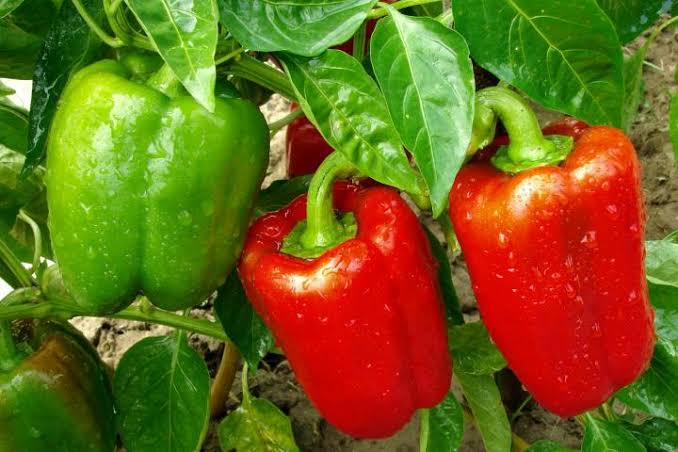
Hello! Today, let's explore a colorful, sweet, and highly nutritious fruit – the Bell Pepper (Capsicum annuum L.) – which serves as both a healthy food and a natural remedy for various ailments. Let's dive in!
📸 [Photo 1 & 2 – Illustrations and real photos of the Bell Pepper plant]


I. GENERAL OVERVIEW OF BELL PEPPERS
Bell Pepper (scientific name: Capsicum annuum L., family Solanaceae) is an herbaceous plant producing large, thick-walled, juicy, non-spicy fruits. Coming in red, yellow, orange, and green, it is packed with vitamins A, C, and antioxidants.
🌱 Key Characteristics
- • Stem: Small bushy herb, succulent, heavily branched, 50cm–1m tall.
- • Leaves: Opposite or alternate, oval or elliptic, pointed tip, glossy dark green.
- • Flowers: Small, white or pale yellow, solitary at leaf axils.
- • Fruit: Bell-shaped, 5–8cm diameter, thick juicy flesh, hollow inside with seeds. Green when young, turning red, yellow, orange, or purple when ripe. Sweet and crisp.
II. HISTORY AND ORIGIN
Bell peppers originate from Mexico, Central America, and northern South America. Introduced to Europe in the 16th century, they spread globally. Unlike other chili peppers, bell peppers lack significant capsaicin, giving them a sweet flavor rather than spiciness.
III. GROWTH CHARACTERISTICS AND IDEAL CONDITIONS
a. Ecological characteristics
- Herbaceous plant, sun-loving, thrives in warm climates.
- Fruit is rich in vitamin C and antioxidants.
b. Care requirements for optimal growth
- 🌡️ Temperature: Daytime 25–28°C, nighttime 15–18°C. Above 35°C causes flower drop.
- ☀️ Light: Full sun lover, requires 6–8 hours of direct sunlight daily.
- 🌱 Soil: Well-draining, loose loamy soil rich in organic matter, pH 5.5–7.0.
- 💧 Water & Moisture: Maintain 60–70% humidity. Water daily, avoid waterlogging.
- 🌾 Nutrition: Balanced NPK fertilization, organic fertilizer according to growth stages.
📸 [Photo 3 & 4 – Dishes and applications of Bell Peppers]


IV. NUTRITIONAL COMPOSITION AND HEALTH BENEFITS
a. Nutritional value (per 100g raw red bell pepper)
- 💧 Water: 92g
- 🔥 Calories: 26 kcal
- 🥩 Protein: 1g
- 🍚 Carbohydrates: 6g (4.2g natural sugars)
- 🥗 Dietary Fiber: 2.1g
- 🍊 Vitamin C: Very high (>150% DV)
- 👁️ Vitamin A & Beta-carotene: Boosts immunity and eye health
- 🧠 Vitamin B6 & Folate: Supports nervous system and cellular renewal
- 🦴 Vitamin E & K1: Benefits skin, hair, and blood clotting
- 🦴 Minerals: Potassium, Phosphorus, Zinc
b. Key Health Benefits
- 💪 Immunity Support: High Vitamin C content strengthens defense mechanisms.
- 👁️ Eye Care: Lutein and zeaxanthin protect vision.
- ❤️ Cardiovascular Protection: Lowers bad cholesterol and regulates blood pressure.
- ⚖️ Weight Management: Low calorie and fiber-dense for long satiety.
- 💄 Skin & Hair Care: Anti-aging properties, promotes healthy glowing skin.
V. PROPAGATION AND CARE TECHNIQUES
a. Propagation
🌱 Seed Selection & Preparation:
- Select high-quality F1 disease-resistant seeds.
- Soak seeds in warm water (~50°C) for 12 hours.
- Sow in seed trays, cover lightly with soil, maintain moisture.
- Germinates in 5–7 days under adequate sunlight.
🌱 Seedling Standards:
- 25–30 days old, 10–15cm tall, 4–6 true leaves, sturdy stems.
b. Care & Pest Control
- 💧 Watering: 1–2 times daily, keeping soil moist without waterlogging.
- ☀️ Sun Exposure: Requires 6–8 hours of sunlight per day.
- 🌾 Fertilization: Apply NPK every 7–10 days; boost Calcium and Potassium during flowering.
- ✂️ Pruning: Pinch tips when plants reach 20cm height; prune lower old leaves.
🛡️ Common Pests & Diseases:
- Thrips: Spray neem oil or organic soap solution.
- Spider Mites: Spray with strong water pressure or acaricide.
- Caterpillars: Hand-pick or use Bacillus thuringiensis (Bt).
- Bacterial Wilt: Remove infected plants, treat soil with lime.
- Downy Mildew & Anthracnose: Apply Trichoderma or copper-based fungicides.
VI. TRADITIONAL REMEDIES & USES
⚠️ Important Note:
These are folk remedies for informational reference only and have not been scientifically validated as primary medical treatments.
- Parts Used: Roots, stems, leaves, fruits.
- Harvesting: 2–3 months after planting. Green peppers when firm and full-sized; colored peppers when fully turned red, yellow, or orange.
- Preparation: Fresh or dried.
- Taste & Nature: Pungent, sweet, warm nature.
📝 Uses of Plant Parts:
- Leaves: Rich in flavonoids and vitamins; crushed leaves can be applied topically to minor cuts or bug bites.
- Stems: Processed into organic compost or livestock feed.
- Roots: Decoctions are traditionally used to soothe joint pain (exercise caution with dosage).
🌱 Thank you for reading!
We hope you found this guide helpful.
Don't forget to follow our blog for more gardening and nutrition insights!
📌 Share this post if you found it useful!




Comments (0)
No comments yet.
Leave a Comment