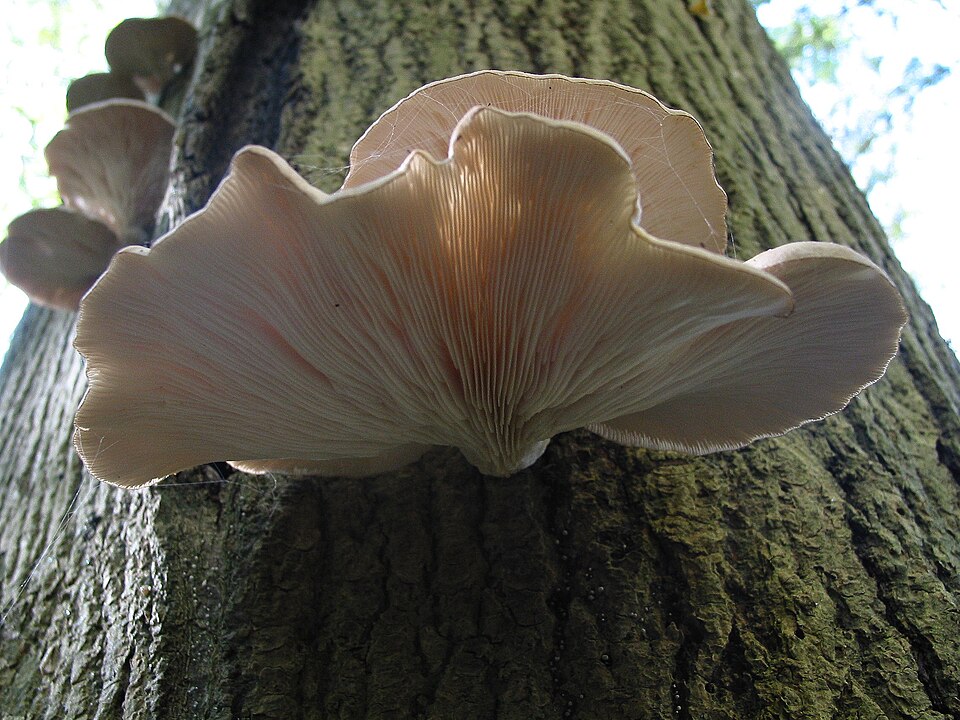
Hello there! Today, let's explore a popular mushroom species with a unique oyster-shell shape and high nutritional value – The Oyster Mushroom (Pleurotus ostreatus) – which serves as both a nutritious food and a valuable medicinal remedy supporting various health conditions. Let's dive into the details together!
📸 [Photo 1 and 2 – Conceptual and real-life photos of Oyster Mushrooms]


I. GENERAL INTRODUCTION TO OYSTER MUSHROOMS
The Oyster Mushroom (scientific name: Pleurotus ostreatus) is an edible mushroom species belonging to the family Pleurotaceae. It was first cultivated in Germany as a food source during World War I, but it was not until the 1970s that oyster mushrooms began to be commercially cultivated worldwide. In nature, this mushroom grows on dead or weakened tree trunks, forming overlapping fan-like caps resembling a staircase.
🌱 Identification Characteristics
- • Mushroom Cap: Offset funnel shape, slightly convex when young, spreading widely as it grows, 5-15cm in diameter.
- • Gills: White or ivory, running down along the stem.
- • Stem: Short, eccentric, firm, and white inside.
- • Color: Varies by variety: white, dark gray, light brown, or bright yellow.
II. HISTORY AND ORIGIN
Oyster mushrooms originated wild in the Himalayan mountains and were first harvested and cultivated in Germany during World War I (1914–1918) as a subsistence food. By the 1970s, cultivation techniques were refined and shared globally. Today, the oyster mushroom stands as one of the most widely consumed cultivated mushrooms on the planet.
III. GROWTH CHARACTERISTICS AND IDEAL CONDITIONS
a. Ecological Characteristics
- Grows naturally on decaying wood trunks.
- Rich in nutrients, easy to cultivate, highly affordable.
b. Ideal Growing Conditions
- 🌡️ Temperature: Cold-tolerant strains 13–20°C, heat-tolerant strains 24–28°C.
- 💧 Humidity: Substrate 65–70%, ambient air 80–90%.
- ☀️ Light: Requires diffuse indirect light, avoid direct sunlight.
- 🧪 pH Level: 6.0–7.0.
- 🌬️ Ventilation: Proper airflow to prevent CO2 buildup which deforms caps.
📸 [Photo 3 and 4 – Dishes and culinary uses of Oyster Mushrooms]


📸 [Photo 5 and 6 – Dishes and applications of Oyster Mushrooms]


IV. NUTRITIONAL COMPOSITION AND HEALTH BENEFITS
a. Nutritional Profile (per 100g fresh mushroom)
- 💧 Water: ~90.4g.
- 🥩 Protein: ~4g (33-43% in dry weight).
- 🍚 Carbohydrates: ~3.4g.
- 🥗 Fiber: High content, supports digestion.
- 🔥 Energy: 30-35 kcal.
- 🍊 Vitamins: C, PP (B3), B2, B5, B6, Folic Acid.
- 🦴 Minerals: Potassium, Iron, Calcium, Copper, Phosphorus.
- 🧬 Bioactive Compounds: Lovastatin, Polysaccharides.
b. Key Health Benefits
- 🩸 Lowers Blood Lipids: Soluble fiber and lovastatin reduce harmful cholesterol.
- 🩸 Regulates Blood Sugar: Highly beneficial for individuals with diabetes.
- 💪 Boosts Immunity: Rich vitamins and minerals protect body cells.
- 🥗 Promotes Digestion: High fiber supports healthy intestinal peristalsis.
- 🧠 Brain Health: Vitamin B3 helps reduce Alzheimer's risk.
- 🩸 Lowers Uric Acid: Beneficial for managing gout conditions.
V. PROPAGATION AND CARE TECHNIQUES
a. Cultivation & Propagation
🍄 Mother Culture (Test Tube):
- PDA medium (potato-dextrose-agar) + CaCO₃.
- Tissue or spore inoculation, incubated at 28°C for 8 days.
🍄 Grain Spawn:
- Boiled cereal grains mixed with lime and gypsum.
- Autoclaved, inoculated with mother culture, kept in dark at 24-28°C.
🍄 Substrate Bags:
- Sawdust + rice bran + corn flour + lime.
- Steam sterilized, layered with grain spawn, incubated for 15-25 days.
b. Maintenance & Pest Control
- 🌡️ Temperature: 20-30°C.
- 💧 Humidity: 80-90%.
- ☀️ Light: Indirect light; keep away from harsh direct sun.
- 💧 Watering: Mist spray 2-3 times daily; avoid spraying directly onto young pins.
- ✂️ Harvesting: Harvest when the cap margin is still slightly rolled down; twist gently at the base to remove the cluster.
🛡️ Pest & Mold Management:
- Orange/Green/Black Molds: Isolate infected bags immediately; maintain strict sanitation.
- Fungus Gnats & Flies: Use fine mesh netting, camphor, or clove oil as repellents.
- Substrate Prep: Proper composting and steam sterilization are essential.
- Contamination Handling: Discard heavily infected bags; treat minor spots with potassium permanganate solution.
VI. SUPPORTIVE HEALTH REMEDIES
⚠️ Important Note:
These are traditional folk practices, not scientifically proven medical cures. Use for reference only.
- Used Parts: Fruiting body (mushroom cap and stem).
- Harvest Season: Cold strains (Oct–Mar), heat strains (year-round). Harvests cycle 6-10 times over 2 months.
- Form: Fresh or dried.
- Properties: Sweet taste, warm nature.
- General Uses: Reduces cholesterol, balances blood sugar, lowers blood pressure, supports cancer prevention, enhances immunity, supports brain health, lowers uric acid.
📝 Therapeutic Support Applications:
- Cholesterol Reduction: Natural lovastatin lowers blood fats and triglycerides.
- Blood Sugar Regulation: Supports metabolic health in diabetic individuals.
- Blood Pressure Control: High potassium content helps protect cardiovascular health.
- Cancer Prevention Support: Inhibits growth mechanisms of breast and colon cancer cells.
- Immune Enhancement: Stimulates immune cells and anti-inflammatory pathways.
- Cognitive Support: Vitamin B3 helps lower the risk of cognitive decline and Alzheimer's.
- Uric Acid Reduction: Helps manage symptoms for gout sufferers.
🌱 Thank you for reading!
We hope this guide gave you valuable insights into this nutritious mushroom.
Don't forget to follow our blog for more interesting health & botany topics!
📌 Share this article if you found it helpful!
Comments (0)
No comments yet.
Leave a Comment