Hello there! Today we are exploring a familiar seed with a unique shape and high nutritional value – The Chickpea Plant (Cicer arietinum L.) – which is both a nutritious food and a valuable medicinal plant that supports many health conditions. Let's dive into the details together!
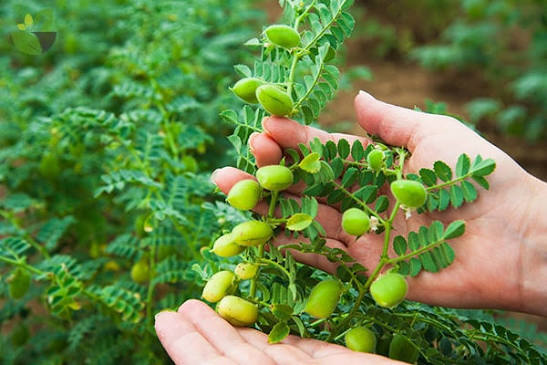
📸 [Photo 1 & 2 – Simulated and actual images of the Chickpea plant]


📸 [Photo 3 & 4 – Detailed images of Chickpea seeds and plant]


I. GENERAL INTRODUCTION TO THE CHICKPEA PLANT
Chickpea (scientific name: Cicer arietinum L.) is a legume seed belonging to the Fabaceae family. The seeds are small, round, slightly rough, and featuring a pointed tip resembling a chicken's beak. It is a food rich in plant protein, fiber, and vitamins, widely popular in Mediterranean, Indian, and Middle Eastern cuisines.
🌱 Identification Characteristics
- • Stem and branches: Small herbaceous plant, erect or spreading, covered with short glandular hairs.
- • Leaves: Odd-pinnately compound leaves with slightly serrated margins.
- • Flowers: Solitary in leaf axils; petals white, pale pink, greenish, or light purple.
- • Pods and seeds: Short, swollen pouch-like pods containing 2-3 seeds. Seeds feature a pointed tip like a beak, yellow-cream or dark brown.
II. HISTORY AND ORIGIN
Chickpeas originated in the Middle East and Ancient Egypt region combined with the Levant roughly 7,000 to 7,500 BCE. It is one of the oldest cultivated legume crops in human history.
III. GROWTH CHARACTERISTICS AND IDEAL CONDITIONS
a. Ecological characteristics
- A legume plant with nitrogen-fixing ability that enriches soil fertility.
- Seeds are rich in protein and fiber, with a low glycemic index.
b. Care conditions for healthy growth
- 🌡️ Temperature: Ideal range is 24-30°C.
- ☀️ Light: Requires abundant direct sunlight; does not tolerate shade well.
- 🌱 Soil: Sandy loam, loose, well-drained, pH 6.0-7.0.
- 💧 Watering: Moderate watering; drought-tolerant but sensitive to waterlogging.
- 🌾 Sowing season: Sow in spring or early dry season when soil temperature exceeds 18°C.
📸 [Photo 5 & 6 – Dishes and culinary uses of Chickpeas]


📸 [Photo 7 & 8 – Further recipes and applications of Chickpeas]


IV. NUTRITIONAL COMPOSITION AND DIVERSE BENEFITS
a. Nutritional value (per 100g)
- 🥩 Protein: Helps build and repair muscle tissues.
- 🥗 Dietary Fiber: Supports digestive health and bowel regularity.
- 🍊 Vitamins: B1, B2, B6, C.
- 🦴 Minerals: Iron, Calcium, Potassium, Magnesium.
b. Key health benefits
- 🍳 Nutrient-Dense: Abundant in plant protein, iron, zinc, and B vitamins.
- 🥗 Digestive Health: High fiber prevents constipation and feeds gut flora.
- 🩸 Blood Sugar Control: Low GI value helps maintain steady blood glucose levels.
- ⚖️ Weight Management: Keeps you feeling full for longer periods.
- 🌾 Soil Improvement: Naturally fixes atmospheric nitrogen into the soil.
V. PROPAGATION AND DETAILED CARE TECHNIQUES
a. Propagation
🌱 Preparation before planting:
- Select plump seeds free of pests and cracks.
- Clear weeds, till soil thoroughly, and build raised beds to prevent waterlogging.
- Sow during spring or early dry season when soil temps stay above 18°C.
🌱 Planting steps:
- Spacing: Space seeds 30-45 cm apart along rows.
- Sowing depth: 4-5 cm deep.
- Water lightly to keep soil moist; avoid overwatering to prevent seed rot.
b. Maintenance and pest management
- ☀️ Light: Requires 6-8 hours of direct sunlight daily.
- 💧 Irrigation: Water at the base, avoiding foliage; water only when upper soil dries out.
- 🌱 Soil & Nutrition: Well-drained soil with pH 5.5-7.0; apply organic fertilizer.
- 🌾 Weeding: Keep beds weed-free during early seedling stage.
🛡️ Common Pests and Diseases:
- Fusarium Wilt: Treat seeds with fungicide; practice 3-4 year crop rotation.
- Ascochyta Blight: Plant resistant cultivars, ensure space ventilation, apply copper fungicides.
- Root Rot: Prevent waterlogging and maintain light, loose soil aeration.
- Pod Borers: Maintain field hygiene, handpick larvae, or use bio-pesticides.
- Aphids: Utilize yellow sticky traps or spray bio-fungal controls.
VI. HERBAL & TRADITIONAL SUPPORT REMEDIES
⚠️ Important Note:
These remedies are based on traditional folk usage and are for informational purposes only. Consult a healthcare professional before use.
- Parts Used: Stems, leaves, and seed pods.
- Harvest Time: 3-5 months post-sowing when leaves turn yellow, pods dry brown, and seeds harden.
- Preparation Form: Fresh or dried.
- Properties: Sweet taste, neutral property.
- General Benefits: Enhances digestion, balances blood sugar, protects cardiovascular health, and aids weight management.
📝 Therapeutic Support Uses:
- Diabetes Support: Low GI with fiber that slows carbohydrate absorption.
- Cardiovascular Health: Helps lower LDL cholesterol and stabilizes blood pressure.
- Weight Control: High protein and fiber content promote long-lasting satiety.
- Constipation & Digestion: Fiber stimulates smooth intestinal peristalsis.
- Antioxidant Protection: Contains compounds that reduce colorectal risk factors.
- Bone Health: Rich in Calcium, Iron, Zinc, and Phosphorus for bone density.
🌱 Thank you for reading!
We hope you found this guide to golden nutritional chickpeas informative.
Don't forget to follow our blog for more exciting plant guides!
📌 Share this article if you found it helpful!


Comments (0)
No comments yet.
Leave a Comment