
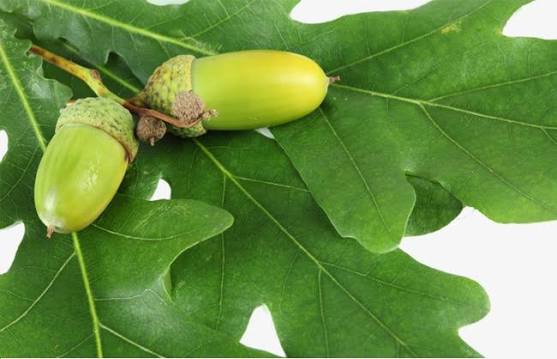
Hello! Today we explore the majestic tree linked to many legends and with countless wonderful benefits – the Oak Tree (Quercus) – both a symbol of strength and a valuable medicinal plant supporting many conditions. Let's find out the details together!
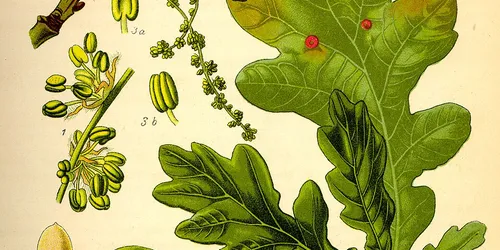
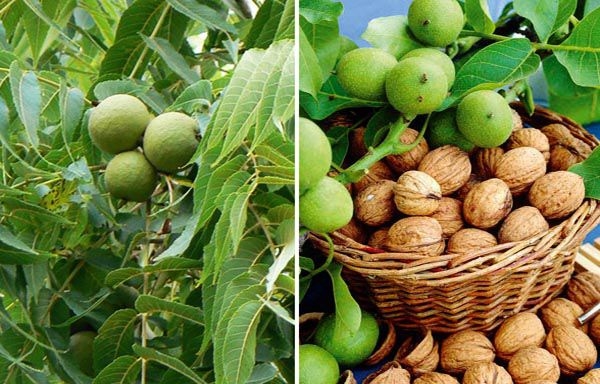
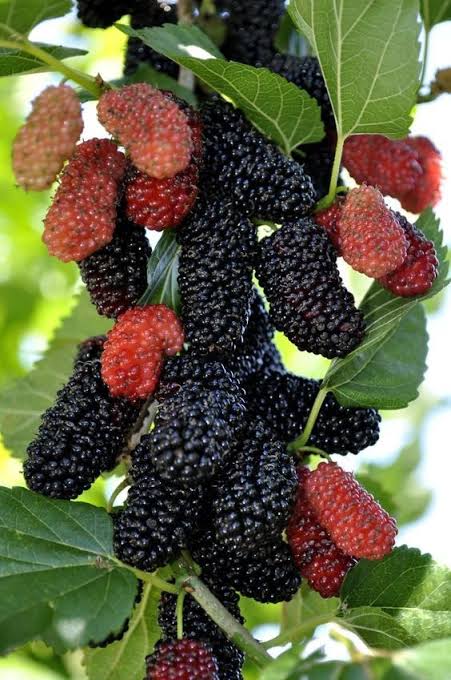
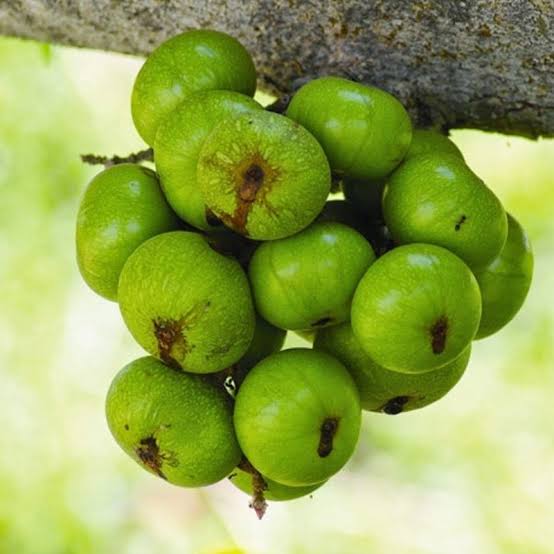
📸 [Photos 1 and 2 – Illustration and real images of the Oak Tree]
I. GENERAL INTRODUCTION TO THE OAK TREE
Oak (scientific name: Quercus) is the common name for about 400 species of trees or shrubs in the genus Quercus of the family Fagaceae. "Oak" may also appear in species names of related genera, notably Lithocarpus (stone oak) or the genus Fagus (also called beech). This genus is native to the Northern Hemisphere, and includes evergreen or deciduous species, living from boreal latitudes to tropical regions of Asia and America.
🌱 Identification features
- • Trunk: Tall and large, trunk straight and sturdy, gray-brown bark, surface cracked and rough.
- • Leaves: Arranged in whorls or alternately, leaf margins usually lobed, serrated or entire depending on species.
- • Flowers and Fruit: Squirrel-tail shaped flowers appear in spring; fruit is a nut (acorn) type in a cup-shaped structure. Each acorn contains 1 seed (rarely 2 or 3) and takes 6–18 months to mature, depending on species.
II. HISTORY AND ORIGIN
Oak appeared millions of years ago and quickly adapted well to temperate and subtropical climates of the Northern Hemisphere.
📜 History
- Distribution: The genus Quercus currently has about 400 species, concentrated mainly in Europe, Asia and North America.
- Mythological symbol: Ancient Greeks considered oak the tree of Zeus; Romans associated oak with Jupiter.
- Ancient legend: Many thousand-year-old oaks like the Major Oak in England are linked to the legend of hero Robin Hood.
- Historic tree: The 500-year-old "marriage" oak in Germany or the Angel Oak in America are proof of tenacious vitality through many generations.
- Oak wood: Premium material in ancient shipbuilding and furniture making due to hardness and durability.
- Ecology: Creates abundant food source from acorns for many wild animal species.
III. GROWTH CHARACTERISTICS AND IDEAL LIVING CONDITIONS
a. Ecological characteristics
- Perennial large tree, prefers temperate and subtropical climate.
- Rich in tannins, cellulose, lignin and compounds with medicinal properties.
b. Care conditions for always green and healthy trees
- 🌡️ Climate and Temperature: Suitable for cold weather, withstands frost and harsh winters. Ideal growth temperature 7–21°C, grows strongest at about 13°C.
- ☀️ Light: Is a light-loving species, must be placed or planted in a place with direct sunlight. Avoid planting in shady or light-deficient places because the tree will become stunted.
- 🌱 Soil: Not very picky, can live on various types of soil. Requires soil to be airy and well-drained. Cannot grow in lowland or waterlogged areas. Can live on dry soil, sand or thin gravel, but cannot tolerate waterlogged lowland soils.
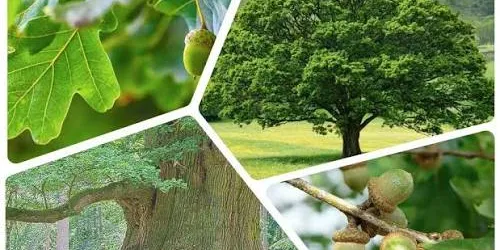
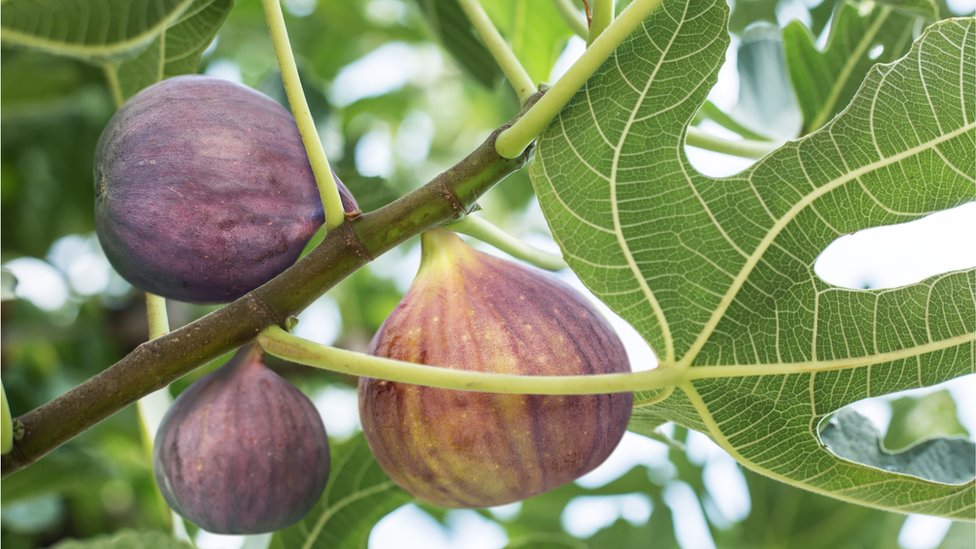
📸 [Photo 3 – Images of acorns and applications from Oak]
IV. NUTRITIONAL COMPOSITION AND DIVERSE BENEFITS
a. Composition
Composition of oak wood trunk:
- 🌳 Cellulose: About 38% – 52%, forming the solid framework for wood fibers.
- 🌿 Hemicellulose: About 25% – 30%, playing a role in binding cellulose fibers.
- 🪵 Lignin: About 22% – 25%, natural adhesive making wood hard.
- 🧬 Other compounds: 5% – 10% including organic substances creating characteristic flavor (like tannins and vanillin when making wooden barrels for wine fermentation).
Composition of oak bark:
- 🍂 Tannins: High percentage (15% – 20%), main active compound creating astringency with antibacterial and astringent effects.
- 🧬 Ellagitannins and Gallic acid: Important polyphenols.
- 🌿 Other active compounds: Including Saponin, catechin, flavonoids, pectin and starch.
b. Remarkable benefits
Benefits of oak wood (Furniture & Construction industry):
- 🪑 Making furniture: Oak wood has beautiful grain, high durability, often used for cabinets, tables, chairs and floors.
- 🐜 Natural termite resistance: Oak heartwood contains tannins helping fight pests well without chemical preservatives.
- 🌦️ Weather resistance: Bears loads well and adapts quickly to harsh climates.
Benefits of oak bark and leaves (Traditional medicine):
- 💊 Treating digestive diseases: Oak bark supports treatment of enteritis, diarrhea and dysentery.
- 🧬 Detoxification and cooling: Helps remove dampness, antiseptic and reduce symptoms of jaundice, hemorrhoids.
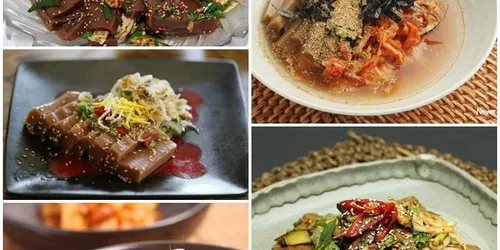
Dishes and preparation methods from acorns:
- 🥓 Jamón Ibérico: Famous Spanish salted ham from pigs fattened with fallen acorns, creating characteristic rich flavor.
- 🍞 Acorn flour bread or biscuits: Acorns are peeled, boiled to remove tannins (astringent/bitter taste), dried then ground into fine flour to bake bread.
- 🥣 Acorn porridge or soup: Finely ground acorns cooked with water or milk, creating a nutrient-rich dish.
- ☕ Acorn coffee (beverage): Acorns well roasted then ground and brewed like caffeine-free coffee.
V. PROPAGATION TECHNIQUES AND DETAILED CARE
a. Propagation
🌱 Seed Selection and Harvesting:
- Mother tree selection: Take from trees 11-12 years or older, straight trunk, wide canopy, good growth and disease-free.
- Timing: Harvest seeds from early to mid-autumn when seeds just mature, avoid letting seeds fall long on the ground.
- Seed sorting: Remove empty seeds by soaking in water, choose plump seeds, achieve germination rate above 70%.
🌱 Seed Treatment and Cold Stratification:
- Preliminary drying: Remove good seeds and drain gently.
- Moist stratification: Mix seeds with moist sand, humus or peat then put in a moisture-retaining bag.
- Cold storage: Place seed bag in a cool environment or refrigerator to stimulate the process of breaking embryo dormancy.
🌱 Sowing Seeds and Caring for Seedlings:
- Substrate preparation: Use loose, nutrient-rich soil or forest soil mixed with mature organic fertilizer.
- Sowing: Place seed flat or gently press the seed tip into soil about 2-3 cm deep then cover with a thin layer of soil.
- Watering and shading: Keep soil continuously moist, place bed in a shady place or with a shade net against strong sun.
- Transplanting: When seedlings are tall and strong, roots develop stably and separate from the seed coat, they can be moved to the garden or planted permanently.
b. Care and disease prevention
- ☀️ Light and Soil: Place tree in a place with full sun (6-8 hours per day). Use loose, well-drained soil. Avoid water pooling at the base.
- 💧 Watering and Fertilizing: Young seedlings watered regularly every week, especially in summer. Adult trees have deep roots and absorb groundwater themselves, little watering needed. Apply moderate fertilizer in the growing season to support trunk and leaf development.
- 🧹 Weeding and Pruning: Dig the base to clean weeds and dig soil around the base about 1 meter wide in the first years. Prune to remove dry branches, diseased branches or misplaced shoots to concentrate nutrients.
🛡️ Pest and disease prevention:
- Timely pruning: Only prune branches in winter (tree's rest period) to avoid attracting insects that transmit fungal pathogens.
- Wound treatment: Use special paint applied immediately to large cuts to prevent fungi and bacteria from entering.
- Watering and fertilizing: Water regularly around the base but not waterlogged. Help the tree have enough resistance against pathogens.
- Cleaning around the base: Clean fallen leaves and rotten branches under the tree to limit hiding places for pests.
- Regular inspection: Observe leaves and trunk regularly to detect early signs of discoloration, yellowing or bark cracking.
VI. REMEDIES SUPPORTING DISEASE TREATMENT
⚠️ Important note:
This is a folk remedy, not scientifically proven, for reference only.
- Parts used: Leaves, trunk, root bark, seed wax.
- Harvest season:
• Fruit ripeness signs: Fruit skin changes from green-brown to yellow-brown or brown-yellow, mature seeds easily separate from the cap without force.
• Harvesting method: Use a pole with hook to pick each fruit cluster on branches or pick up fallen seeds below. Avoid breaking or cutting branches to protect productivity for the next season.
• Seed selection note: Choose healthy seeds, without disease or mold. - Preparation form: Dried and fresh.
- Benefits:
• Treating diarrhea and dysentery: Tannins in oak bark astringe the intestinal mucosa, reduce secretion and reduce intestinal motility, supporting treatment of acute enteritis.
• Stopping bleeding and treating hemorrhoids: Oak bark helps constrict blood vessels locally, used to reduce bleeding symptoms from hemorrhoids, mild gastrointestinal bleeding or excessive menstruation.
• Treating sore throat and swollen gums: Oak bark decoction as mouthwash applied to throat mucosa helps reduce inflammation, treat swollen gums and mouth ulcers.
• Treating skin diseases: Helps dry, clean purulent wounds, eczema, oozing and chronic skin ulcers.
• Reducing sweating: Used in foot or hand soaking to reduce excessive sweating of palms and soles.
🌳 Thank you for reading this article!
I hope you gained much useful knowledge about this majestic and tenacious tree.
Don't forget to follow the blog for more interesting information!
📌 Share the article if you found it helpful!
Comments (0)
No comments yet.
Leave a Comment