
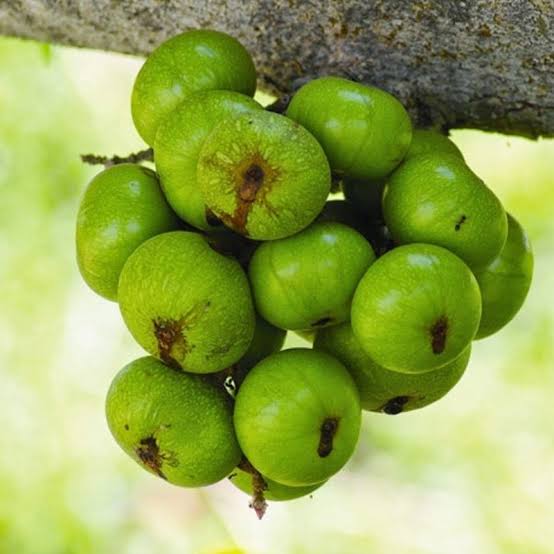
Hello! Today we explore a familiar plant growing wild in tropical regions with many wonderful benefits – the Cluster Fig (Ficus racemosa) – both a side vegetable and a valuable medicinal plant supporting many conditions. Let's find out the details together!
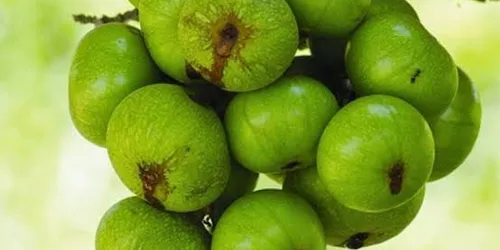
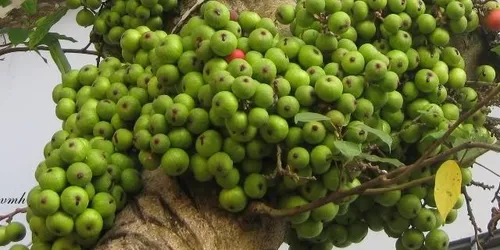
📸 [Photos 1 and 2 – Illustration and real images of the Cluster Fig]
I. GENERAL INTRODUCTION TO THE CLUSTER FIG
Cluster Fig (scientific name: Ficus racemosa) is a fast-growing large tree in the Moraceae family. It grows wild in tropical and subtropical regions on moist soils at forest edges, most commonly along ponds, lakes, rivers and streams.
🌱 Identification features
- • Trunk: Large tree, base wide tapering to top, bark gray-brown covered with a thin powdery layer and containing white latex. Many branches, flexible trunk easy to bend for bonsai.
- • Leaves: Simple leaves, elongated oval or elliptical, surface smooth, glossy and fresh green. Leaf margins sparsely toothed. Buds and young leaves characteristically pink-red.
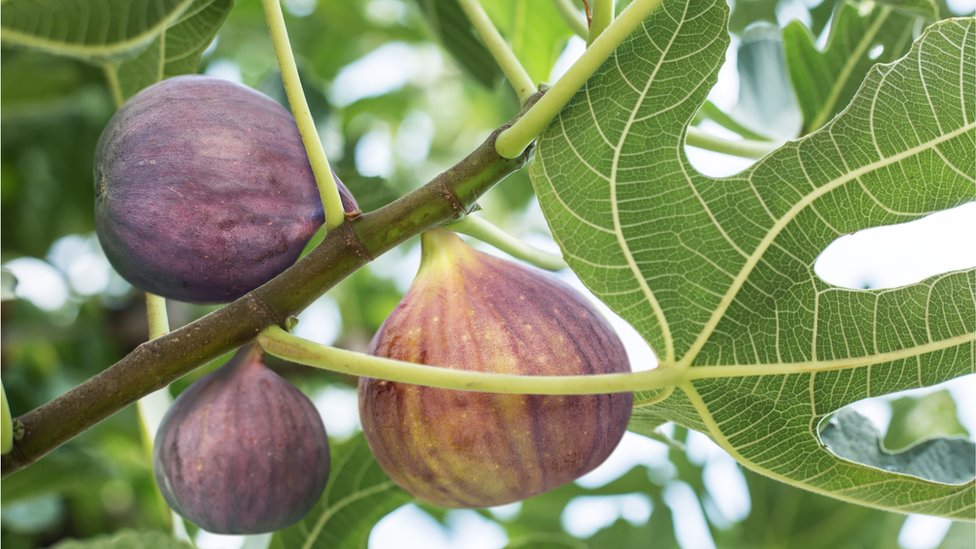
- • Fruit: Medium size, smaller than common fig, growing in dense clusters on trunk and old branches. Fruit has a deeply sunken navel part.
II. HISTORY AND ORIGIN
Cluster Fig originates from the tropical and subtropical regions of Asia, especially common in Southeast Asia, Indochina, India and southern China.
📜 History
- Natural development: No specific time point, develops in nature and wild, grows easily everywhere in Asia and Indochina.
III. GROWTH CHARACTERISTICS AND IDEAL LIVING CONDITIONS
a. Ecological characteristics
- Perennial large tree, prefers tropical and subtropical climate.
- Rich in fiber, natural sugars, vitamins A, B6, C, K and minerals.
b. Care conditions for always green and healthy plants
- ☀️ Light: Likes light but develops poorly under prolonged direct sun; excessive shade makes leaves thin and stretches branches.
- 🌡️ Temperature: Best 22°C to 32°C; tolerates wide temperature range but grows slowly when too cold or too hot.
- 💧 Water need: Needs very large amounts of water due to water-loving nature; tolerates waterlogging well thanks to strong roots, ideal near ponds, rivers.
- 🌱 Soil: Not picky, but grows fast and fruits abundantly on loose, moisture-retaining soil with moderate drainage.
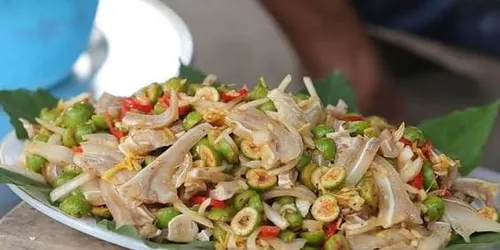
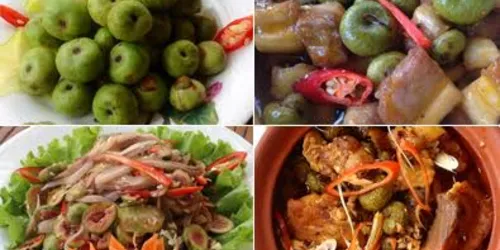
📸 [Photos 3 and 4 – Images of dishes and applications from Cluster Fig]
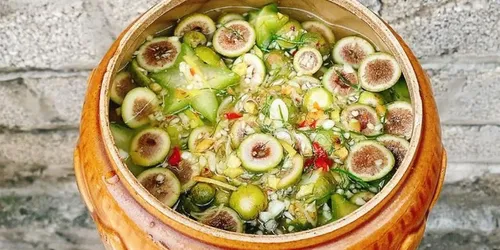
📸 [Photo 5 – Images of dishes and applications from Cluster Fig]
IV. NUTRITIONAL COMPOSITION AND DIVERSE BENEFITS
a. Nutritional composition
- 🌾 Fiber: High content, supports good digestion.
- 🍊 Vitamins: Vitamins A, B6, C and K.
- 🦴 Minerals: Calcium, potassium, copper and magnesium.
- 🧬 Latex: Contains active compounds like bergenin, lupeol acetate and β-sitosterol with medicinal properties.
b. Remarkable benefits
- 🍽️ Side vegetable: The fruit eaten raw is very crunchy, slightly astringent with sweet aroma. Young fruits are used in rolls, salads or pickles.
- 🌾 Provides fiber: The fruit adds much fiber, supporting better digestion.
- 💊 Digestive support: Helps reduce bloating, stimulates digestion and improves enteritis, dysentery.
- 🧬 Anti-inflammatory, detoxifying: Latex, leaves and bark in external use help resolve edema, treat acne, impetigo or swelling pain.
- 🌳 Provides shade: Year-round green foliage cools and freshens living space.
- 💰 Feng shui meaning: Symbolizes prosperity, fullness, luck and wealth for the owner.
- 🎨 Bonsai: Rugged trunks and beautiful form make it popular as decorative bonsai.
V. PROPAGATION TECHNIQUES AND DETAILED CARE
a. Propagation
🌱 Layering method:
- Branch selection: Choose healthy, disease-free semi-mature branch, diameter about 1-2 cm.
- Girdling: With a sharp knife, remove a 3-4 cm ring of bark, scrape the white layer to expose the wood.
- Wrapping: Use a mix of humus, moist coconut fiber around the cut, then wrap with plastic and tie both ends tightly.
- Cutting down: After 40-50 days when roots are abundant and yellow/brown, cut the branch to plant in a pot or soil.
🌱 Cutting method:
- Branch selection: Cut semi-mature or medium-aged branch (from small branch to wrist size), about 20-30 cm long.
- Treatment: Reduce leaves to avoid water loss, soak the base in rooting hormone for 2-3 hours.
- Planting: Insert the branch into loose soil or clean sand, maintain humidity regularly and provide shade, avoid direct sun and strong wind.
- Care: Spray to maintain stem and leaf moisture; after about 3-4 weeks, roots and new shoots allow reducing shade.
b. Care and disease prevention
- ☀️ Light: Place the plant in a sunny, airy place.
- 🌡️ Temperature: Suitable for hot humid climate, tolerates drought well but fears waterlogging.
- 💧 Watering: Water regularly every day or 2-3 times per week. Keep soil sufficiently moist, do not let roots waterlog.
- 🌾 Fertilizing: Use mature organic fertilizer or NPK (strengthen phosphorus and potassium). Fertilize periodically around the base to stimulate many fruits.
- ✂️ Pruning: Regularly cut diseased, dense branches. Stop watering for a few days to force off-season fruiting (if the plant is healthy).
🛡️ Pest and disease prevention:
- Leaf-eating insects and mealybugs: Bite young leaves, suck sap making leaves curl and growth stunted.
- Stem borers: Bore into branches and trunk, making branches dry or break.
- Fungal and rust diseases: Cause leaf spots, yellowing and leaf drop in the humid rainy season.
- Preventive measures: Prune old and dense branches to create light penetration. Fertilize balanced, avoid excess nitrogen. Water moderately, keep good drainage. Collect larvae or use a small stick to kill stem borers. Use garlic-chili solution or diluted soap to prevent aphids, leaf-eating insects. For severe stem borers, inject specific medicine like Regent or Confidor into the bore hole then seal. Apply the 4 correct principles when spraying chemicals.
VI. REMEDIES SUPPORTING DISEASE TREATMENT
⚠️ Important note:
This is a folk remedy, not scientifically proven, for reference only.
- Parts used: Leaves, fruits, bark and latex.
- Harvest season:
• About 3 months after the plant produces new leaf shoots.
• Main harvest season: From mid-summer (June) to the end of the year and before Tet.
• Yield tip: Growers often stop watering and pick leaves around June-August to stimulate fruiting at year-end. - Preparation form: Fresh and dried.
- Taste:
• Fruit: Neutral nature, sweet taste, slightly astringent, helps resolve edema, detoxifies and promotes digestion.
• Leaves: Sweet taste, slightly bitter, cool nature, detoxifying, anti-inflammatory effects.
• Bark: Astringent taste, often used as antiseptic, anti-inflammatory. - Benefits:
• Leaves (especially those with nodules): Treat swelling pain, acne, impetigo, promote lactation, support digestion and reduce inflammation.
• Fruit: Blood tonic, expectorant, antiseptic, support digestion, treat indigestion and stomach pain.
• Bark: Activates blood circulation, relieves pain, treats rheumatism, acne, and supports treatment of blocked milk ducts.
• Latex: External application to treat acne, impetigo, swelling pain, and bruises.
📝 Therapeutic support benefits:
- Digestive support: Helps reduce bloating, stimulates digestion and improves enteritis, dysentery.
- Anti-inflammatory, detoxifying: Latex, leaves and bark in external use help resolve edema, treat acne, impetigo or swelling pain.
- Blood tonic, expectorant: The fruit helps blood tonic, expectorant, antiseptic, supports digestion, treats indigestion and stomach pain.
- Activates blood circulation, relieves pain: The bark helps activate blood circulation, relieve pain, treat rheumatism, acne, and supports treatment of blocked milk ducts.
- Treats acne, impetigo: Latex applied externally treats acne, impetigo, swelling pain, and bruises.
🌿 Thank you for reading this article!
I hope you gained much useful knowledge about this nutritious folk plant.
Don't forget to follow the blog for more interesting information!
📌 Share the article if you found it helpful!


Comments (0)
No comments yet.
Leave a Comment