
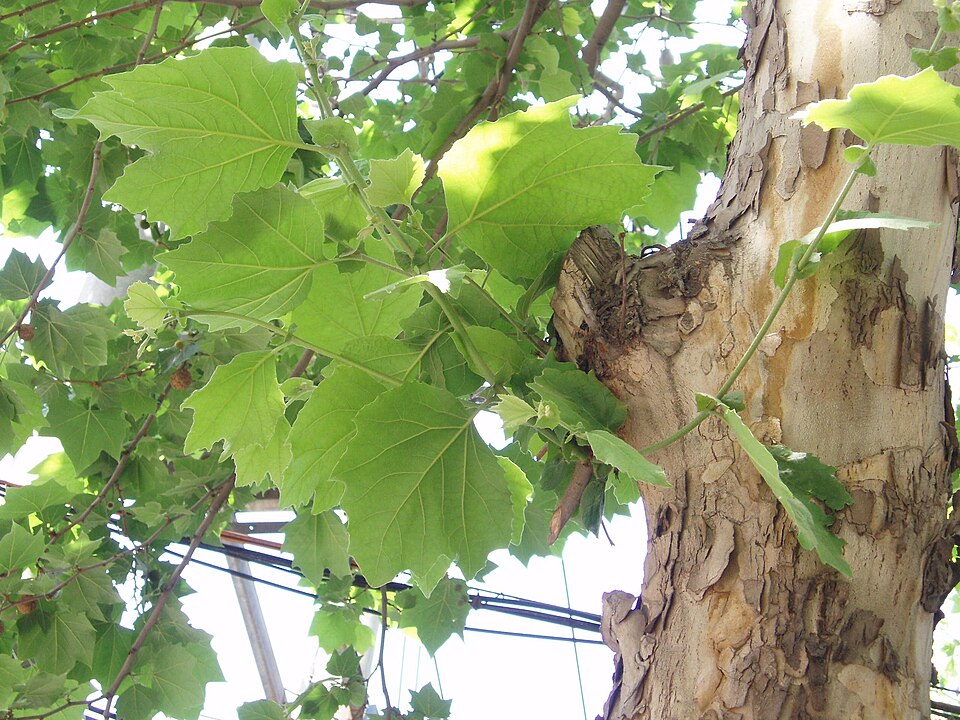
Hello! Today we explore the majestic hybrid tree linked to industrial history and with countless wonderful benefits – the London Plane Tree (Platanus × acerifolia) – both a symbol of resilience and a valuable medicinal plant supporting many conditions. Let's find out the details together!
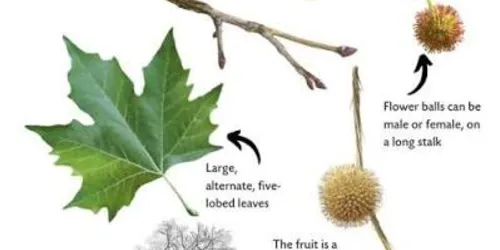
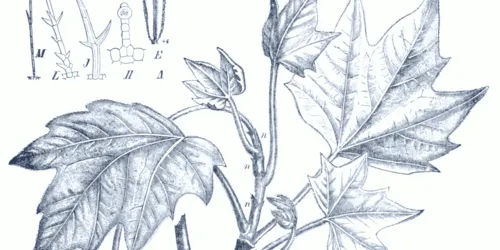
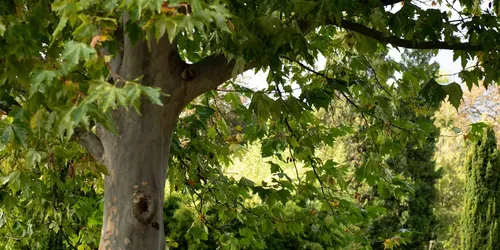
📸 [Photos 1 and 2 – Illustration and real images of the London Plane Tree]
I. GENERAL INTRODUCTION TO THE LONDON PLANE TREE
London Plane (scientific name: Platanus × acerifolia) is a type of tree in the genus Platanus. It is generally considered a cross between Platanus orientalis (oriental plane) and Platanus occidentalis. Some experts consider it rather a cultivar of the species P. orientalis.
🌱 Identification features
- • Size and Bark: Trunk height large, can reach over 40 meters when mature. Trunk circumference imposing, base circumference can reach 3 meters. Bark has the property of easily peeling off in large pieces, helping the tree self-remove dust and pollutants attached to the trunk.
- • Leaves: Leaves broad, shape similar to maple leaf (distinct lobes), arranged alternately on branches. Simple leaves, goosefoot-shaped with 3–5 deep triangular lobes, edges serrated.
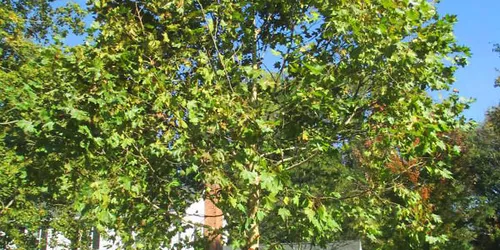
- • Canopy: Canopy broad, rising high and providing large shade, often planted as shade tree along city streets.
- • Flowers: Flowers small, unisexual monoecious, growing into separate spherical heads.
- • Fruit: Achene type fruits combined into spherical clusters (usually 1–2 fruits per stalk), rough, containing many small seeds inside.
II. HISTORY AND ORIGIN
Hybrid nature: The two parent species originate from two different continents (Asia/Southeast Europe and North America). They are believed to have naturally crossbred when planted near each other, with a hypothesis that this process occurred in Spain before being brought to England.
📜 History
- Discovery in England: The tree appeared and was recorded in London (England) since the 17th century, from which it got the popular English name London plane.
- Urban adaptation: This hybrid is famous for its powerful vitality, ability to tolerate smoke and air pollution very well during the Industrial Revolution in England, so it was later widely planted in many major cities worldwide.
III. GROWTH CHARACTERISTICS AND IDEAL LIVING CONDITIONS
a. Ecological characteristics
- Perennial large tree, prefers temperate and subtropical climate.
- Rich in tannins, antioxidants and compounds with medicinal properties.
b. Care conditions for always green and healthy trees
- ☀️ Light: Prefers full sun, needs at least 6 hours of direct lighting per day for green canopy and beautifully colored bark. The tree can tolerate partial shade but growth will be poorer.
- 🌡️ Climate: Suitable for temperate and subtropical climate regions (good cold resistance, while also tolerating hot summers).
- 🌱 Soil: Suitable for loamy soil, sandy soil or sandy clay soil rich in humus. Optimal growth pH between 6.0 and 8.0 (slightly acidic to slightly alkaline). Tolerates soil compaction and harsh environments in urban areas, sidewalks.
- 💧 Water: Young trees need regular watering to maintain soil moisture helping the root system develop deep and stable in the first 2–3 years. Adult trees have excellent drought resistance, practically only needing natural rain except during prolonged heat waves.
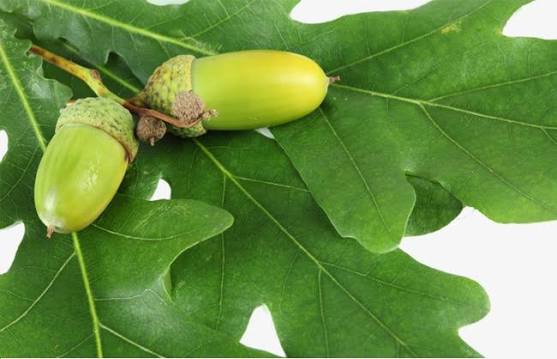
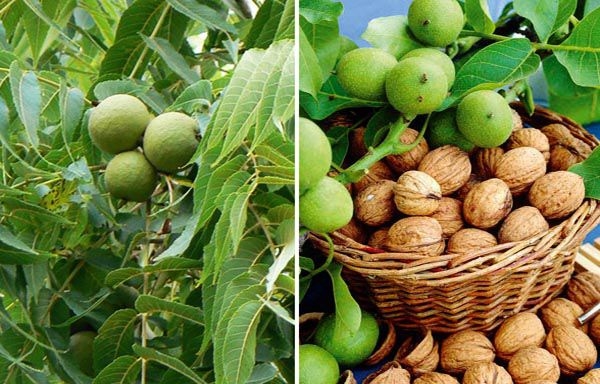
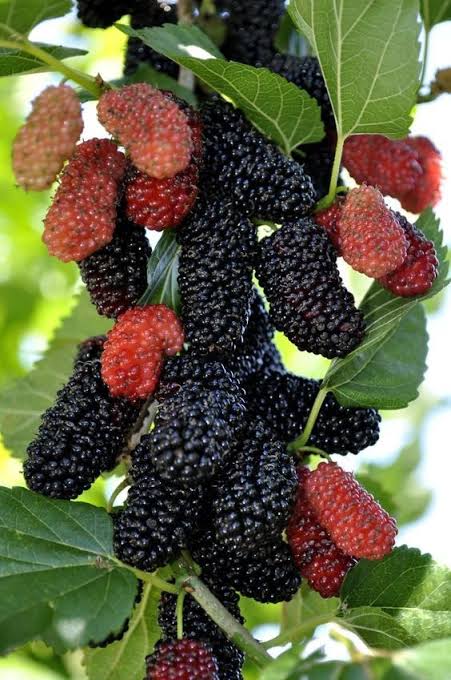
📸 [Photos 3 and 4 – Images of leaves, fruits and applications from London Plane]
IV. NUTRITIONAL COMPOSITION AND DIVERSE BENEFITS
a. Composition
- 🌳 Trunk and bark: Large woody trunk 35–40m tall; brown, gray, green bark layer self-peeling into large smooth pieces.
- 🍃 Leaves: Simple leaves, alternate, goosefoot-shaped with 3–5 deep triangular lobes, edges serrated.
- 🌸 Flowers: Flowers small, unisexual monoecious, growing into separate spherical heads.
- 🌰 Fruit: Achene type fruits combined into spherical clusters (usually 1–2 fruits per stalk), rough, containing many small seeds inside.
b. Remarkable benefits
- 🌬️ Urban air filtration: Leaves and bark layer act as effective filter, helping absorb smoke, pollutant particles and harmful gases in the urban environment.
- 🌡️ Providing shade and temperature regulation: The broad canopy helps shade, cool streets and parks, reducing urban surface temperature.
- 🎨 Landscaping: The trunk with its unique peeling bark layer and tall large stature, bringing high aesthetic value to streets, grounds and architectural structures.
V. PROPAGATION TECHNIQUES AND DETAILED CARE
a. Propagation
🌱 Cutting technique:
- Timing: Late autumn (around November) when the tree starts to drop leaves.
- Branch selection: Take a healthy semi-mature branch (semi-hard wood), cut a moderate length from an adult mother tree.
- Treatment: Dip the branch base in standard rooting hormone solution (like IBA) to increase survival rate.
- Planting: Insert into loose soil, keep moist and place in a shady place until the branch produces roots and develops new shoots.
🌱 Seed sowing technique:
- Harvesting: Harvest ripe fruits in September–October when the fruit skin changes color.
- Seed treatment: Separate seeds and treat by moisture or pre-cooling before sowing to break dormancy.
- Sowing: Sow seeds into clean soil tray, cover with a thin layer of soil, water keeping moisture even until seeds germinate into seedlings.
b. Care and disease prevention
- ☀️ Light and Location: Plant the tree in a place with full sun for green leaves and strong growth. Avoid planting too close to large buildings because the tree's root system grows very strongly and widely.
- 🌱 Soil and Watering: The tree is suitable for humus-rich, fertile and well-drained soils, but also tolerates poor or compacted soil. Need to water regularly deep at the base in the first year to stabilize the root system. Once mature, the tree has very good drought resistance. Spread a layer of organic mulch around the base 5–7 cm thick to retain moisture and protect roots.
- ✂️ Pruning and Cleaning: Prune branches in winter (when the tree drops leaves) to shape, remove dry branches or control size as desired. The bark has the property of self-peeling annually to remove dust, this is a normal physiological phenomenon, no intervention needed.
🛡️ Pest and disease prevention:
- Cultivation and hygiene measures: Prune excess branches to create circulation and receive enough light for the canopy. Collect and destroy all fallen leaves, infected dry branches to remove fungal spores. Disinfect pruning tools when moving to another tree to avoid spreading pathogens. Only perform pruning in dry season (like winter) to limit fungi entering through wounds.
- Biological and manual measures: Check and spray with strong water jet to reduce density of aphids or leafhoppers attached to leaf undersides. Regularly apply organic fertilizer and water reasonably to keep the tree healthy, increasing natural resistance to pests.
- Chemical measures: Use biological fungicides or copper-based specialized pesticides in preventive spraying during prolonged humid weather if leaf spots, anthracnose appear. Treat with specific systemic insecticide when aphid, leafhopper density becomes too high causing yellowing leaves.
VI. REMEDIES SUPPORTING DISEASE TREATMENT
⚠️ Important note:
This is a folk remedy, not scientifically proven, for reference only.
- Parts used: Bark, leaves, seeds.
- Harvest season: Harvest ripe fruits around September to October, however they usually remain attached to the tree throughout winter and fall naturally in the following spring rather than being commercially harvested.
- Preparation form: Dried and fresh.
- Benefits:
• Bark: Scrape bark, dry, decoction for water or cook with vinegar. Reduce toothache, swollen gums, antiseptic for wounds, stop diarrhea. Decoction (10g bark with 200ml water) to gargle or apply.
• Leaves: Collect fresh leaves or dry, use as decoction to drink, powder or medicinal wine. Antioxidant, reduce swelling, soothe eye inflammation and skin pain. Crush fresh leaves and apply directly to damaged skin area.
• Seeds/Fruits: Support skin healing, reduce acne, fade bruise scars. Burn to get ash or powder mixed with honey/vinegar for external application.
🌳 Thank you for reading this article!
I hope you gained much useful knowledge about this majestic and tenacious tree.
Don't forget to follow the blog for more interesting information!
📌 Share the article if you found it helpful!
Comments (0)
No comments yet.
Leave a Comment