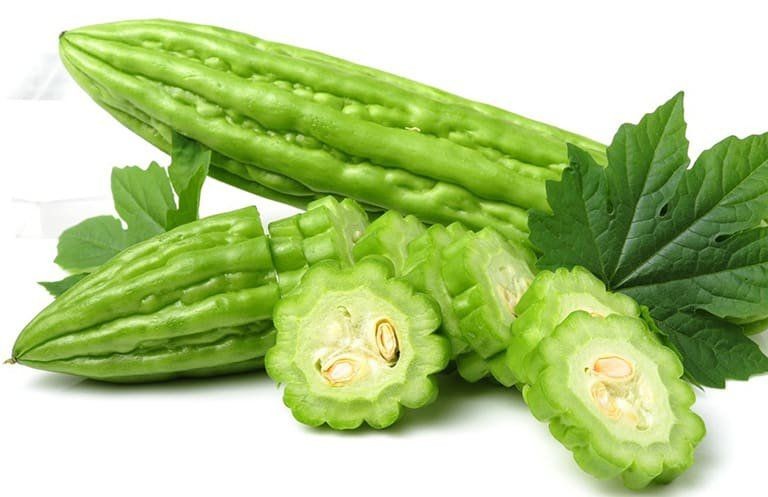
Hello! Today we explore the familiar fruit with its characteristic bitter taste that brings countless health benefits – Bitter Melon (also known as Bitter Gourd) – a refreshing food for meals and a precious herb supporting diabetes and many other conditions. Let's dive in!
📸 [Photo 1 & 2 – Simulated and real images of Bitter Melon]


I. INTRODUCTION TO BITTER MELON
Bitter Melon (scientific name: Momordica charantia) is a herbaceous vine belonging to the gourd family (Cucurbitaceae), very common in tropical regions. The fruit and parts of the plant contain high amounts of vitamin C and minerals, famous for their characteristic bitter yet refreshing taste, bringing many health benefits.
🌱 Identification Features
- • Stem: Herbaceous vine with many tendrils for climbing, 3-5m long.
- • Leaves: Alternate, green, deeply lobed (3-9 lobes), serrated margins.
- • Flowers: Unisexual in leaf axils, male flowers have long stalks, female short. Yellow, insect-pollinated.
- • Fruit: Oblong, skin with warts or rough spines. Unripe fruit is green, turning orange-yellow when ripe and splitting open.
II. ORIGIN AND DISTRIBUTION
The plant originates from tropical Africa, then spread and was fully domesticated in Asia, becoming a familiar fruit and medicinal herb worldwide.
III. GROWTH CHARACTERISTICS AND IDEAL CONDITIONS
a. Ecological Characteristics
- It is a climbing vine, vigorous grower, requiring trellis support.
- The fruit has a characteristic bitter taste thanks to the compound Momordicin.
b. Care Conditions for Lush Growth
- 🌡️ Temperature: Ideal 20°C – 35°C. Below 20°C or above 35°C, growth is stunted, flowers drop.
- ☀️ Light: Sun-loving, needs 6-8 hours/day for good flowering and fruiting.
- 🌱 Soil: Sandy loam, alluvial soil, loose, rich in humus, pH 5.5-6.6.
- 💧 Moisture: Prefers moisture, regular watering needed especially during flowering and fruit setting. Good drainage to avoid waterlogging.
📸 [Photo 3 & 4 – Dishes or decorative spaces featuring Bitter Melon]


📸 [Photo 5 & 6 – Other dishes or applications of Bitter Melon]


IV. NUTRITIONAL COMPOSITION AND VERSATILE USES
a. Notable Chemical Components
- 🧪 Momordicin: Characteristic bitter taste, stimulates appetite and aids digestion.
- 🩸 Polypeptide-P and Charantin: Insulin-like compounds, support blood sugar control.
- 🍊 Vitamins and Minerals: Rich in Vitamin C, Vitamin A, Potassium, Zinc, Iron, Magnesium.
- 🧬 Antioxidants: Flavonoids and Phenols, protect cells from free radicals.
- 💊 Saponins (Cucurbitacins): Support blood lipid reduction, anti-inflammatory, anti-tumor.
- 🌱 Momordicosides (A, B...): Unique bitter glycosides found in seeds.
- 🫘 Fatty oils & Alkaloids (Vicin): Pharmacologically active compounds.
b. Wonderful Applications
- 🍳 Culinary: Wash fruit, remove seeds, slice thinly for salads with dried meat floss, stuff with meat and mushrooms for cooling summer soup, or stir-fry with eggs for daily meals.
- 🏠 Decoration: Grow as a trellis vine to provide shade for gardens during summer.
- 💊 Health Support: Supports diabetes, cardiovascular, blood pressure, cholesterol reduction.
V. PROPAGATION AND CARE TECHNIQUES
a. Propagation
🌱 Seed Treatment:
- Soak seeds in warm water (2 boiling : 3 cold) for 5-6 hours. Rinse and wrap in a damp cloth at room temperature.
- After 24-36 hours, when seeds crack, sow in seed trays or directly into soil. Cover with thin straw or ash to retain moisture.
- When seedlings have 4-6 true leaves (20-25 days), thin out or transplant to ensure proper spacing.
- Soil: Sandy loam, loose, rich in humus, pH 5.5-6.5. Apply well-rotted manure and phosphate fertilizer before planting.
- Trellis: When plants reach 25-30cm, install A-frame or horizontal trellis for climbing.
b. Care and Disease Prevention
- 💧 Watering: Water regularly 1-2 times/day, especially during flowering and fruiting. Avoid drought or waterlogging.
- ✂️ Trellising and Pruning: Set up trellis when plants reach 25-30cm. Pinch off main stem when 5-6 true leaves appear to encourage branching. Remove old and diseased leaves.
- 🌾 Fertilization: Apply well-rotted manure as base fertilizer. Apply NPK or DAP every 7-10 days, 15cm from the base. Add Potassium and Phosphorus during flowering.
- 🛡️ Pest Control: Regularly inspect garden, remove diseased leaves. Use natural biological preparations (garlic, chili, ginger) for safe prevention.
VI. REMEDY FOR DIABETES - HIGH BLOOD PRESSURE - HIGH CHOLESTEROL
⚠️ Important Note:
This is a folk remedy without scientific validation – for reference only.
- Part used: Whole plant (mainly fruit).
- Harvest season: Plant from March-September, harvest from May-December.
- Preparation: Can be used fresh or dried.
- Taste & Nature: Bitter taste, cooling nature.
- Uses: Clears heat, detoxifies liver, lowers blood sugar, reduces cholesterol, supports weight loss and skin beauty.
📝 Preparation Method:
- Step 1: Slice fresh fruit thinly, dry in shade, then dry-roast until cool, store in a container for later use.
- Step 2: Take 20-25g dried bitter melon and boil with 1000ml water for about 10 minutes.
- Step 3: Divide into several servings and drink throughout the day (drink warm).
🌱 Thank you for reading!
We hope you found useful information about this bitter yet refreshing fruit.
Don't forget to follow our blog for more interesting content!
📌 Share if you found this helpful!



Comments (0)
No comments yet.
Leave a Comment